
Quand
Où
Média
Billets
Free
Please come on time to ensure access to seating.
En présence de
co-présenté par

Following the first edition of The Political Aesthetic, this second iteration continues the screening series’ commitment to examining–through a transnational lens–film and artistic practices that grapple with the entangled social and political histories of colonial and nation-building projects, and the extractive economies that underpin them. Bringing together contemporary and historical works from the Global South, the program considers their epistemological and material conditions across diverse geographies in Asia, Africa, and South America. As it traces continuities and resonances within these contexts and works, the program foregrounds the ways artists have persistently challenged systems of domination and exploitation by producing counter-histories that speak across time and geography.
At its core, the program reflects on the double role of images as agents of colonial power and vehicles for critique and resistance. It does so by focusing on artistic practices that generate subversive visuality—filmic and audio-visual works that unsettle dominant discourses, rework evidentiary aesthetics in institutional archives, and foreground living archives such as songs and landscapes as counter-visual forms. As they engage with contested and marginalized narratives, these films expose the violence of official records while revitalizing forgotten histories.
Each screening will be followed by a collective reflection and discussion with local artists, researchers, and filmmakers around the notions of displacement, refuge, political aesthetics, and creative resistance.
The second edition of The Political Aesthetic screening series is curated by Farah Atoui and Sanaz Sohrabi, unfolding from October 2025 to April 2026, with the support of the Feminist Media Studio.
PROGRAMME
BIOGRAPHIES
Miryam Charles est une réalisatrice, productrice et directrice de la photographie d’origine haïtienne, vivant à Montréal. Elle a produit plusieurs courts et longs métrages de fiction. Ses films ont été présentés dans divers festivals au Québec et à l’international. Son premier long métrage Cette maison a été présenté à la Berlinale, à l’AFI film festival en plus de faire partie du TIFF Top 10 en 2022. Elle a également lancé le court-métrage Au crépuscule au festival de Locarno. Ses œuvres ont été présentées au Musée d’art contemporain de Montréal, à la Leonard and Bina Ellen Gallery, au Everson Museum et au Palais de Tokyo. (La Coop Vidéo)
Noor Abed (née en 1988 à Jérusalem, Palestine) est une artiste interdisciplinaire et cinéaste. Son travail explore les notions de chorégraphie et les relations imaginaires entre les individus, créant des situations où les possibilités sociales sont à la fois répétées et performées. Elle cherche à examiner les performances de la communauté et les mouvements sociaux en relation avec les rituels de l’attente, de la résistance et du deuil. Elle s’intéresse particulièrement au rôle du mouvement rythmique collectif et à l’impact potentiel que les sentiments partagés peuvent avoir sur la création et le maintien d’une communauté. (De Appel)
Rodrigo Ribeiro-Andrade est un réalisateur afro-brésilien. Engagé dans la création de récits qui abordent des questions sociales historiquement cachées, il a débuté en 2020 avec le film primé A Morte Branca do Feiticeiro Negro, élu meilleur court métrage par l’Association brésilienne des critiques de cinéma. Partenaire du noyau créatif Gata Maior Filmes, Ribeiro-Andrade croit fermement en l’art libre et au grand soulèvement des marginaux. (TENK)
Samy Benammar est un artiste et critique de cinéma résidant à Montréal. Son travail d’écriture et de réalisation se pense comme une expérimentation autour d’enjeux sociopolitiques hérités de ses origines algériennes et ouvrières. Il a notamment réalisé kaua’i’o’o (2023), Peugeot pulmonaire (2021) et sous-ex (2022). Ses films, présentés dans des festivals au Canada et à l’international, sont distribués par Winnipeg Film Group, Vidéographe et CFMDC. Ses textes peuvent notamment être lus dans les revues Hors Champs, 24 images et Panorama cinéma. Il effectue en parallèle, un doctorat en recherche et création sur la photographie coloniale dans la Wilaya de Batna en Algérie. Il écoute le bêlement de la chèvre. Même domestiquée, elle reste imprévisible, se refuse à la docilité.
PROGRAMME
Chanson pour le Nouveau-Monde
Miryam Charles | 2021 | Canada | 9 min
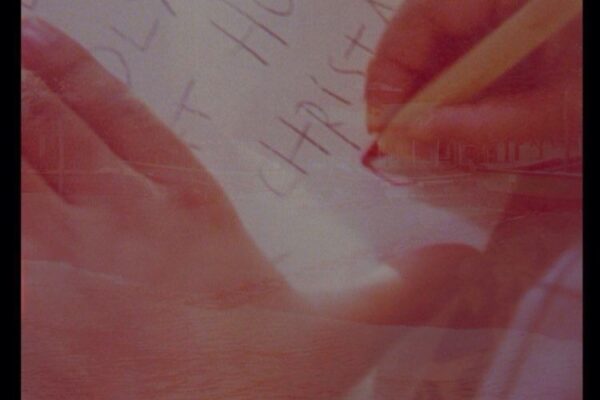
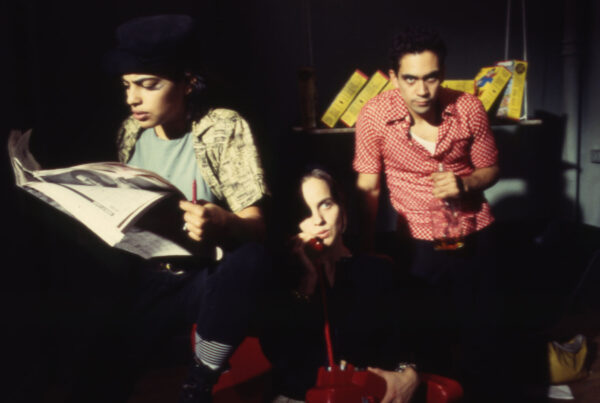
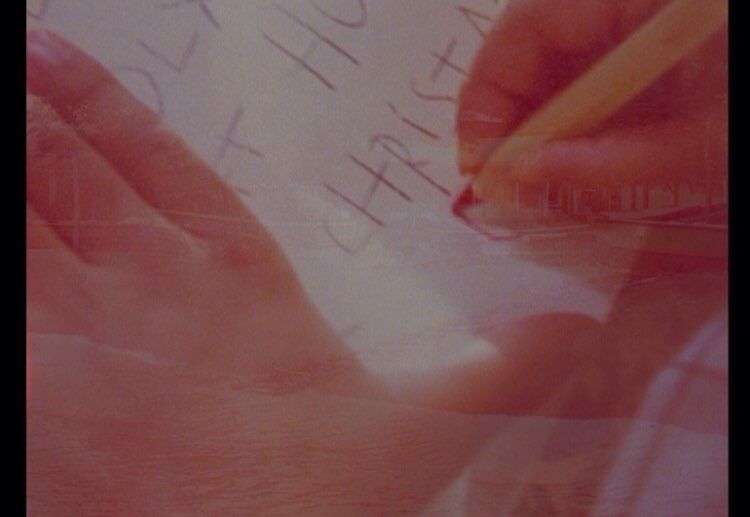
Years after the disappearance of her father in Scotland, a young woman recalls her childhood on a Caribbean island. (La distributrice de films)
Our songs were ready for all wars to come
Noor Abed | 2021 | Palestine | 22 min
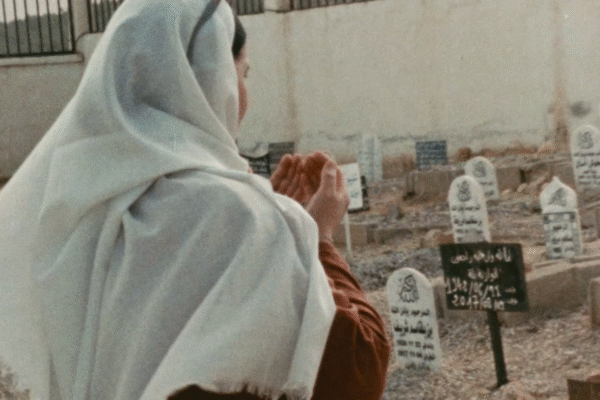
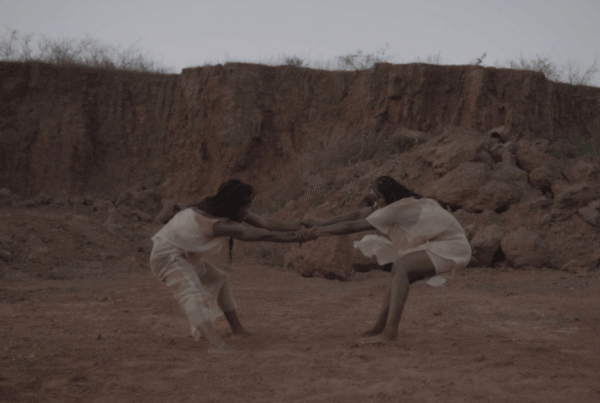
Our songs were ready for all wars to come is a 22-minute film of choreographed scenes based on documented folk tales from Palestine. It begins with four minutes of darkness and the haunting sound of a woman’s voice. The perforated edge of the film, occasionally silhouetted by flashes of light, highlights the nature of the work as a mediated document. Images of women performing draw connections between latent stories of water wells and communal rituals associated with disappearance, mourning and death. The only narration in the film is a song, which is sung by Palestinian singer Maya Khaldi. Its lyrics are a collage of different folk tales. The film explores the critical stance of ‘folklore’ as a source of knowledge and its possible connection to alternative social and representational models in Palestine. How can folklore become a common emancipatory tool for people to overturn dominant discourses, reclaim their history and land, and rewrite reality as they know it? (Ikon Gallery)
Solmatalua
Rodrigo Ribeiro-Andrade | 2022 | Brésil | 15 min
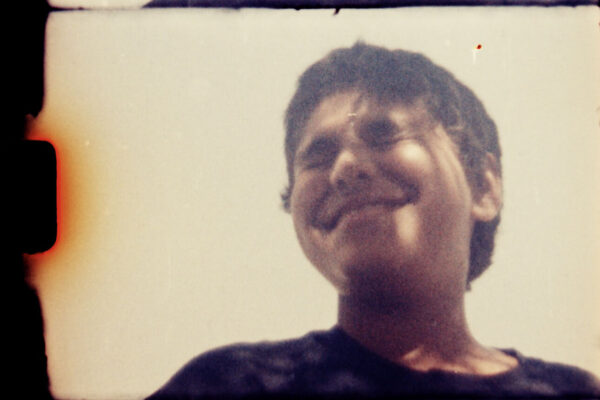
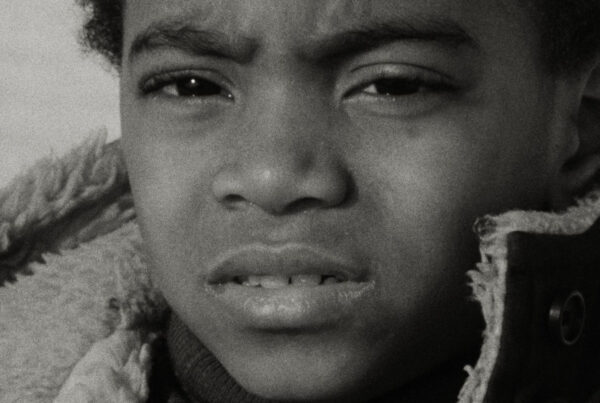
A ritual greeting to Creation and a photograph of a slave ship initiate this organic visualization of memories from the African diaspora. “The history of Brazil has been written by White hands. Both Blacks and Indigenous people who lived here haven’t had their history written yet.” Rodrigo Ribeiro-Andrade, who previously explored similar territory with scenes from sugar plantations in The White Death of the Black Wizard, stays well clear of traditional historical reconstruction in this intuitively edited composition of archive footage, singing and other, impressionistic, elements. This is film as an act of protest, in and of itself. It is as if Ribeiro-Andrade is drawing directly from the source, a dream world of memories, as he blends images of early settlements and children at play in favela alleyways. Performances, dances and provocative activist acts jostle with abstract light, the sound of nature, modern music and melancholy vocals. This is no “objective” historical record, but a poetic essay that connects us directly with a collective consciousness. (IDFA)
Avant Seriana
Samy Benammar | 2024 | Canada | 19 min
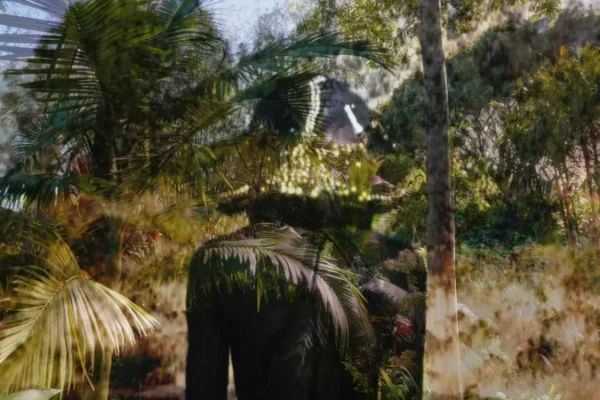
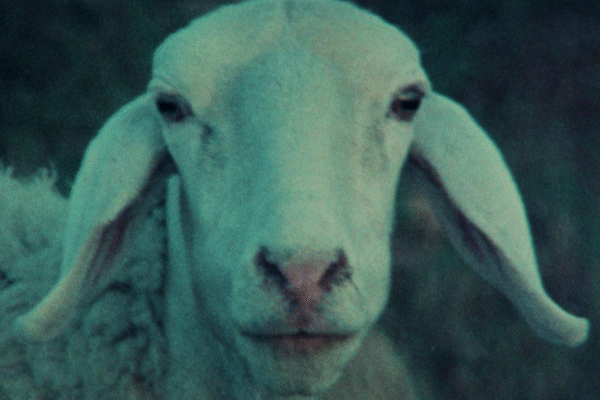
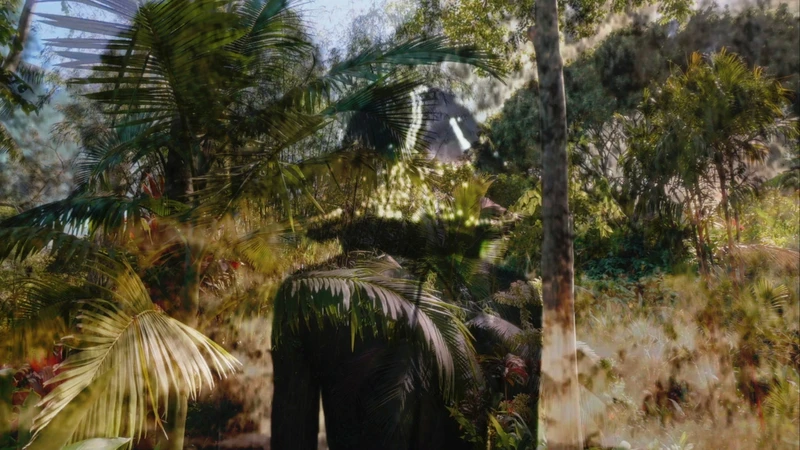
« Mom, you brought me back to our homeland. All I know about these harsh landscapes I learned from books written by the hand that burned these mountains. I try to undo the colonial myths engraved into my memory, but the hills escape my gaze. Do you think I, too, have become the white djinn spoken of by the legends surrounding our martyrs? Avant Seriana is an essay film shot in Super 8 in the Aurès region of Algeria. Observing the landscapes of my native land, I realize that they are divided into several images and times. Two different countries are formed: the Algeria of the mountains and an imaginary one born of the tales I’ve read in colonial archives. My gaze no longer belongs to the places where I was hoping to return to my roots. » – Samy Benammar
The screening will be followed by a discussion with filmmaker Myriam Charles and scholar Christopher Silver.
BIOGRAPHIES
Miryam Charles is a Haitian-born director, producer, and cinematographer based in Montreal. She has produced several short and feature-length fiction films. Her films have been screened at various festivals in Quebec and internationally. Her first feature film, Cette maison, was screened at the Berlinale and the AFI Film Festival, and was included in the TIFF Top 10 in 2022. She also launched the short film Au crépuscule at the Locarno Film Festival. Her works have been exhibited at the Musée d’art contemporain de Montréal, the Leonard and Bina Ellen Gallery, the Everson Museum, and the Palais de Tokyo. (La Coop Vidéo)
Noor Abed (1988, Jerusalem, Palestine) is an interdisciplinary artist and filmmaker. Her practice examines notions of choreography and the imaginary relationship of individuals, creating situations where social possibilities are both rehearsed and performed. She aims to examine performances of the community and social movements in relation to rituals of waiting, resistance, and mourning. Her interest lies strongly in thinking about the role of collective rhythmic movement and the potential impact that shared feelings can evoke in creating and sustaining a community. (De Appel)
Rodrigo Ribeiro-Andrade is an Afro-Brazilian film director. Committed to bringing narratives that address historically hidden social issues, in 2020 debuted with the award-winning A Morte Branca do Feiticeiro Negro selected as the Best Short Film by Brazilian Film Critics Association. Partner of the creative core Gata Maior Filmes, Ribeiro-Andrade steadfastly believes in free art and in the great uprising of the marginalised. (TENK)
Samy Benammar is a Montreal-based artist and film critic. His work as a writer and filmmaker has developed as a form of experimentation around socio-political issues inherited from his Algerian and working-class origins. His films include Adieu Ugarit (2024), Avant Seriana (2024), kaua’i’o’o (2023), and peugeot pulmonaire (2021). They have been shown in festivals such as Prismatic Groung, BFI London festival, RIDM and are distributed by Winnipeg Film Group, Vidéographe and CFMDC. His writings can be read in magazines such as Hors Champs, 24 images and Panorama cinéma. He is also conducting a PhD in research and creation focusing on the Wilaya of Batna, Algeria, and colonial photography. He listens to the bleating of the goat. No matter how domesticated, they remain unpredictable, and resist docility.